
AI-Driven Supply Chains | The Future of Global Trade
AI-Driven supply chains: reshaped smarter forecasting, resilient logistics, and sustainable trade. Explore how AI defines the future of global commerce.
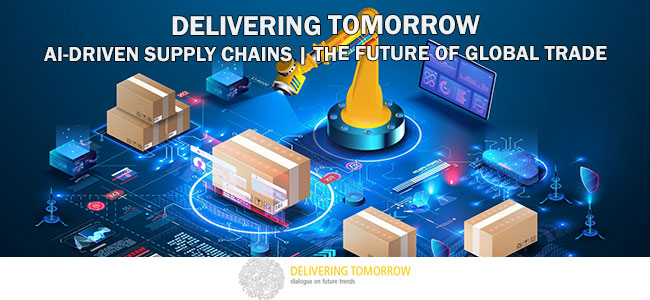
Why AI-Driven Supply Chains Supply Chains Need Robot
Supply chains are the lifeline of global commerce. From manufacturing and sourcing raw materials to logistics and final delivery, every product we use passes through a complex web of interconnected processes. But complexity comes at a cost. Global supply chains often face challenges such as unpredictable demand, shipping delays, regulatory hurdles, and geopolitical disruptions.
Traditional tools are no longer enough to manage this growing complexity. This is where Artificial Intelligence (AI) steps in. AI-driven supply chains are not a futuristic fantasy—they are already here, transforming how businesses plan, produce, move, and deliver goods. By leveraging data, machine learning, and automation, AI makes supply chains faster, smarter, more resilient, and more sustainable.
In this article, we will explore the foundations of AI in supply chains, its benefits, real-world applications, challenges, and the future outlook for global trade.
Foundations of AI Driven Supply Chains
AI in supply chain management isn’t about replacing humans—it’s about augmenting decision-making with machine precision. Three foundational pillars enable this transformation:
-
Big Data Integration
Supply chains generate massive data sets: purchase orders, traffic flows, weather forecasts, IoT sensor readings, and even social media sentiment. AI thrives on this data, learning patterns humans may overlook. -
Machine Learning Algorithms
Predictive models identify demand shifts, optimize routes, or detect risks before they escalate. Over time, algorithms become more accurate as they “learn” from new data. -
Automation and Robotics
Insights from AI don’t just sit in dashboards—they trigger real-world actions. Autonomous vehicles reroute shipments, warehouses adjust inventory, and procurement systems auto-order raw materials based on predictive demand.
Together, these elements form the backbone of AI-driven supply chains.
Key Benefits of AI in Supply Chains
-
Smarter Demand Forecasting
AI uses historical sales, seasonal trends, and external signals to predict demand with remarkable accuracy. This reduces overstocking and stockouts. -
Route Optimization
By analyzing live traffic, fuel costs, and geopolitical risks, AI determines the fastest and safest delivery routes. -
Operational Efficiency
AI aligns production schedules, labor allocation, and order fulfillment in real-time. This minimizes waste and improves throughput. -
Early Risk Detection
From pandemics to port strikes, AI-powered risk models provide alerts and simulate scenarios for proactive response. -
Sustainability Gains
AI enables companies to cut emissions by optimizing energy usage, reducing fuel consumption, and sourcing greener suppliers.
Real-World Applications
-
Amazon: Deploys machine learning to predict purchasing patterns, ensuring high-demand items are stocked close to consumers.
-
Maersk: Combines AI with oceanic weather data to optimize shipping routes, saving millions in fuel.
-
Unilever: Uses AI for demand forecasting tailored to regional consumer behavior, significantly reducing waste.
These case studies show that AI isn’t hype—it’s delivering measurable value.
Challenges of Implementing AI
-
Data Quality Issues
Incomplete or biased data leads to inaccurate predictions. Garbage in, garbage out. -
High Investment Costs
Building AI infrastructure requires software, hardware, and skilled personnel. -
Ethical & Privacy Concerns
Using consumer data for predictive analytics must comply with global privacy regulations like GDPR. -
Skill Gaps in the Workforce
Many organizations lack AI specialists and must invest heavily in reskilling.
AI, Geopolitics, and Global Trade
AI isn’t just a business tool—it’s also a geopolitical weapon.
-
China is investing heavily in AI-powered logistics across the Belt and Road Initiative.
-
The U.S. leverages AI for defense supply chains and trade competitiveness.
-
The EU emphasizes ethical AI, pushing for sustainable and transparent adoption.
Countries that lead in AI will have greater control over future trade flows.
The Human Factor
While AI automates decisions, humans remain critical for oversight, ethics, and strategy. Supply chain professionals must transition from routine tasks to higher-value work such as scenario planning, vendor collaboration, and sustainability initiatives.
This human-AI collaboration is the true future—not AI replacing people, but empowering them.
AI and Sustainability in Trade
Sustainability has moved from “nice-to-have” to “non-negotiable.” Consumers, regulators, and investors demand greener operations. AI supports this shift by:
-
Predicting energy-efficient transportation routes.
-
Tracking suppliers’ environmental performance.
-
Enabling circular economy practices such as recycling and reusing materials.
This makes AI both a business enabler and a sustainability accelerator.
Future Outlook
-
Hyper-Automation
From robotic warehouses to autonomous ships, AI will drive end-to-end automation. -
Digital Twins
Virtual models of supply chains will allow companies to simulate disruptions before they happen. -
Collaborative AI Platforms
Companies will share anonymized data to strengthen collective resilience. -
AI Regulation
Expect stronger global regulations to ensure fair and ethical use of AI in supply chains.
FAQs on AI-Driven Supply Chains
Q: Can AI guarantee zero supply chain disruptions?
No. AI cannot eliminate disruptions but can predict and mitigate their impact.
Q: Is AI too expensive for small businesses?
Cloud-based AI tools are making advanced analytics accessible to SMEs at affordable costs.
Q: Will AI replace supply chain managers?
AI will handle routine tasks, but humans are needed for strategic decision-making and relationship management.
Delivering Tomorrow with AI
AI is no longer optional in supply chain management—it is essential. Companies that embrace AI today are not just optimizing logistics; they are preparing for a future where trade is faster, greener, and more resilient.
The future of global trade belongs to those who combine AI-driven intelligence with human creativity and responsibility.
At Delivering Tomorrow, we believe that AI in supply chains isn’t about machines replacing humans—it’s about empowering humanity to deliver smarter, more sustainable, and more inclusive global commerce.

Pingback: Collaborative Pathways for Digital Transformation » Delivering Tomorrow